





[ad_1]
What’s physique language?
Physique language is the utilization of bodily conduct, expressions, and mannerisms to talk nonverbally, normally achieved instinctively pretty than consciously. Whether or not or not you’re acutely aware of it or not, as soon as you’re employed along with others, you’re repeatedly giving and receiving wordless alerts. Your whole nonverbal behaviors—the gestures you make, your posture, your tone of voice, how quite a bit eye contact you make—ship sturdy messages.
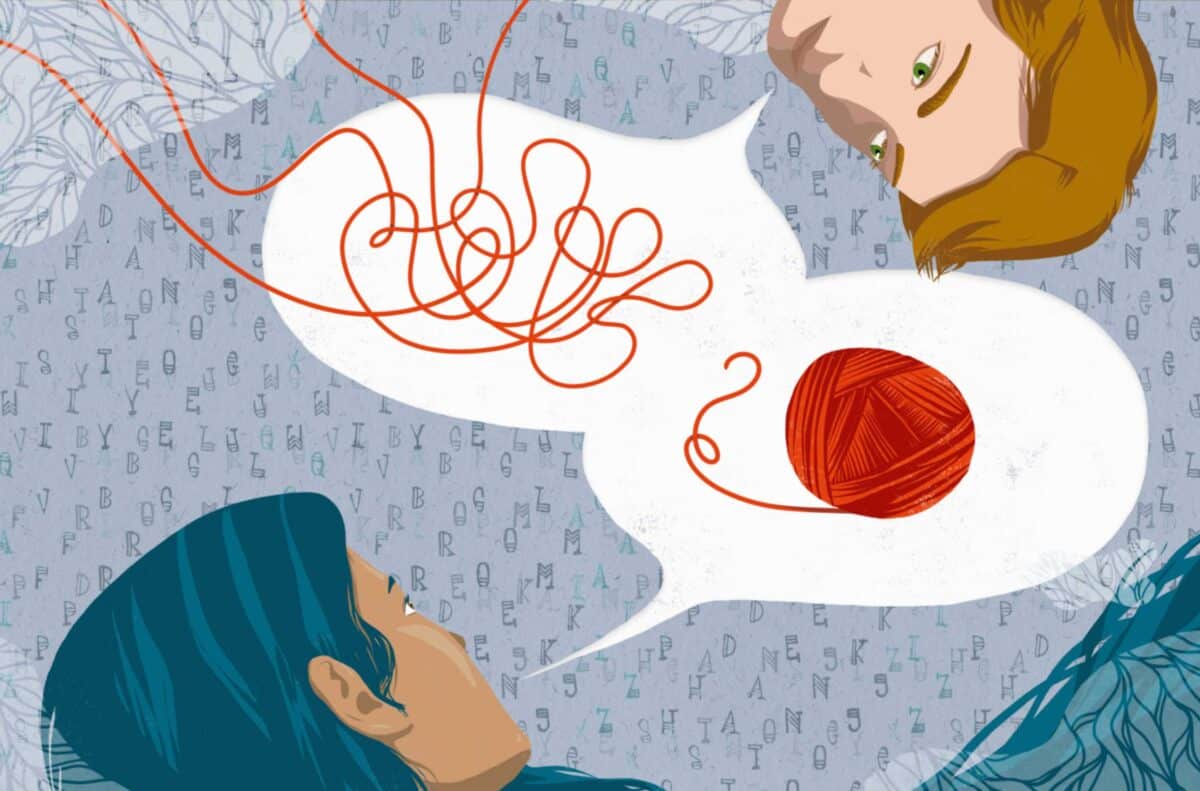
The reality is, it’s not the phrases that you just use nevertheless your nonverbal cues or physique language that discuss the loudest. They may put people cozy, assemble perception, and draw others in route of you, or they may offend, confuse, and undermine what you’re trying to convey. These messages don’t stop when you stop speaking each. Even when you’re silent, you’re nonetheless talking nonverbally.
In some conditions, what comes out of your mouth and what you discuss by means of your physique language is also two utterly numerous issues. Do you have to say one issue, nevertheless your physique language says one factor else, your listener will seemingly actually really feel that you just’re being dishonest. Do you have to say “positive” whereas shaking your head no, as an example. When confronted with such mixed alerts, the listener has to determine on whether or not or to not think about your verbal or nonverbal message. Since physique language is a pure, unconscious language that broadcasts your true feelings and intentions, they’ll seemingly choose the nonverbal message.
However, by bettering the best way you understand and use physique language and nonverbal communication, you could categorical what you truly indicate, be part of larger with others, and assemble stronger, further rewarding relationships—every in your personal {{and professional}} relationships.
The importance of physique language
Your nonverbal communication cues—the best way wherein you concentrate, look, switch, and react—inform the person you’re talking with whether or not or not or not you care, must you’re being truthful, and the best way correctly you’re listening. When your nonverbal alerts match up with the phrases you’re saying, they enhance perception, readability, and rapport. After they don’t, they may generate strain, mistrust, and confusion.
Should you want to flip right into a higher communicator, it’s needed to show into further delicate not solely to the physique language and nonverbal cues of others, however moreover to your particular person.
Physique language can play 5 roles:
- Repetition: It repeats and sometimes strengthens the message you’re making verbally.
- Contradiction: It’d contradict the message you’re trying to convey, thus indicating to your listener that you might be not be telling the truth.
- Substitution: It’d substitute for a verbal message. As an example, your facial options normally conveys a way more vivid message than phrases ever can.
- Complementing: It might add to or complement your verbal message. As a boss, must you pat an employee on the once more together with giving reward, it might enhance the affect of your message.
- Accenting: It might accent or underline a verbal message. Pounding the desk, as an example, can underline the importance of your message.
Types of physique language and nonverbal communication
The varied numerous sorts of nonverbal communication or physique language embrace:
Facial expressions. The human face is very expressive, ready to convey quite a few emotions with out saying a phrase. And in distinction to some varieties of nonverbal communication, facial expressions are frequent. The facial expressions for happiness, unhappiness, anger, shock, concern, and disgust are the an identical all through cultures.
Physique movement and posture. Ponder how your perceptions of people are affected by the best way wherein they sit, stroll, stand, or keep their head. One of the simplest ways you progress and carry your self communicates a wealth of knowledge to the world. The type of nonverbal communication consists of your posture, bearing, stance, and the fragile actions you make.
Gestures. Gestures are woven into the fabric of our every single day lives. Likelihood is you may wave, stage, beckon, or use your arms when arguing or speaking animatedly, normally expressing your self with gestures with out pondering. However, the which implies of some gestures is perhaps very utterly completely different all through cultures. Whereas the “OK” sign made with the hand, as an example, usually conveys a constructive message in English-speaking nations, it’s considered offensive in nations similar to Germany, Russia, and Brazil. So, it’s essential to be careful of how you use gestures to avoid misinterpretation.
Eye contact. As a result of the seen sense is dominant for most people, eye contact is an significantly needed type of nonverbal communication. One of the simplest ways you take a look at someone can discuss many points, along with curiosity, affection, hostility, or attraction. Eye contact can be needed in sustaining the flow into of dialog and for gauging the other particular person’s curiosity and response.
Contact. We discuss an superior deal by means of contact. Consider the very utterly completely different messages given by a weak handshake, a warmth bear hug, a patronizing pat on the top, or a controlling grip on the arm, as an example.
Home. Have you ever ever ever felt uncomfortable all through a dialog on account of the other particular person was standing too shut and invading your space? All of us have a necessity for bodily space, although that need differs counting on the custom, the state of affairs, and the closeness of the connection. It is advisable use bodily space to talk many alternative nonverbal messages, along with alerts of intimacy and affection, aggression or dominance.
Voice. It’s not merely what you say, it’s how you say it. Everytime you converse, completely different people “study” your voice together with listening to your phrases. Points they be aware of embrace your timing and tempo, how loud you converse, your tone and inflection, and sounds that convey understanding, similar to “ahh” and “uh-huh.” Consider how your tone of voice can level out sarcasm, anger, affection, or confidence.
Can nonverbal communication be faked?
There are many books and internet sites that provide advice on the best way to make use of physique language to your profit. As an example, they may instruct you on the best way to take a seat a positive means, steeple your fingers, or shake arms to have the ability to appear assured or assert dominance. Nevertheless the actual fact is that such suggestions aren’t susceptible to work (besides you actually actually really feel assured and in value). That’s on account of you could’t administration your entire alerts you’re constantly sending about what you’re truly pondering and feeling. And the extra sturdy you attempt, the additional unnatural your alerts are susceptible to return all through.
However, that doesn’t indicate that you have no administration over your nonverbal cues. As an example, must you disagree with or dislike what someone’s saying, chances are high you may use adversarial physique language to rebuff the person’s message, similar to crossing your arms, avoiding eye contact, or tapping your toes. You don’t should agree, and even like what’s being said, nevertheless to talk efficiently and by no means put the other particular person on the defensive, you could make a acutely conscious effort to avoid sending adversarial alerts—by sustaining an open stance and actually attempting to know what they’re saying, and why.
How physique language can go fallacious
What you discuss by means of your physique language and nonverbal alerts impacts how others see you, how correctly they like and respect you, and whether or not or not or not they perception you. Sadly, many people ship sophisticated or adversarial nonverbal alerts with out even realizing it. When this happens, every connection and perception in relationships are damaged, as the subsequent examples highlight:
- Jack believes he’ll get alongside good alongside together with his colleagues at work, nevertheless ought to you’ve gotten been to ask any of them, they’d say that Jack is “intimidating” and “very intense.” Considerably than merely take a look at you, he seems to devour you alongside together with his eyes. And if he takes your hand, he lunges to get it after which squeezes so onerous it hurts. Jack is a caring man who secretly wants he had further buddies, nevertheless his nonverbal awkwardness retains people at a distance and limits his capability to advance at work.
- Arlene is engaging and has no draw back meeting eligible males, nevertheless she has a hard time sustaining a relationship for longer than quite a few months. Arlene is humorous and attention-grabbing, nevertheless though she constantly laughs and smiles, she radiates strain. Her shoulders and eyebrows are noticeably raised, her voice is shrill, and her physique is stiff. Being spherical Arlene makes many people actually really feel anxious and uncomfortable. Arlene has fairly a bit going for her that is undercut by the discomfort she evokes in others.
- Ted thought he had found the correct match when he met Sharon, nevertheless Sharon wasn’t so optimistic. Ted is nice making an attempt, hardworking, and a clear talker, nevertheless appeared to care further about his concepts than Sharon’s. When Sharon had one factor to say, Ted was always ready with wild eyes and a rebuttal sooner than she may finish her thought. This made Sharon actually really feel ignored, and shortly she started relationship completely different males. Ted loses out at work for the same objective. His incapacity to take heed to others makes him unpopular with a lot of the parents he most admires.
These good, well-intentioned people wrestle of their attempt to connect with others. The sad issue is that they are unaware of the nonverbal messages they convey.
[Read: Tips for Building a Healthy Relationship]
Should you want to discuss efficiently, avoid misunderstandings, and luxuriate in robust, trusting relationships every socially and professionally, it’s essential to understand how to make use of and interpret physique language and improve your nonverbal communication experience.
Uncover your space for therapeutic and progress
Regain is an web {{couples}} counseling service. Whether or not or not you’re going via points with communication, intimacy, or perception, Regain’s licensed, accredited therapists can help you improve your relationship.
Get started
HelpGuide is individual supported. We earn a charge must you be part of Regain’s suppliers after clicking by means of from this web site.
Be taught further.
How one can improve nonverbal communication
Nonverbal communication is a rapidly flowing back-and-forth course of that requires your full think about the moment-to-moment experience. Do you have to’re planning what you’re going to say subsequent, checking your phone, or occupied with one factor else, you’re nearly positive to miss nonverbal cues and by no means completely understand the subtleties of what’s being communicated.
[Read: Active Listening Tips]
Along with being completely present, you could improve the best way you discuss nonverbally by learning to deal with stress and creating your emotional consciousness.
Tip 1: Be taught to deal with stress throughout the second
Stress compromises your capability to talk. Everytime you’re wired, you’re further susceptible to misread completely different people, ship sophisticated or off-putting nonverbal alerts, and lapse into unhealthy knee-jerk patterns of conduct. And take into accout: emotions are contagious. Should you’re upset, it’s vitally susceptible to make others upset, thus making a foul state of affairs worse.
Do you have to’re feeling overwhelmed by stress, take a outing. Take a second to chill out sooner than you leap once more into the dialog. Once you’ve regained your emotional equilibrium, you’ll actually really feel larger geared as much as deal with the state of affairs in a constructive means.
The quickest and surest answer to calm your self and deal with stress throughout the second is to utilize your senses—what you see, hear, scent, fashion, and call—or by means of a soothing movement. By viewing {a photograph} of your teenager or pet, smelling a favorite scent, listening to a positive piece of music, or squeezing a stress ball, as an example, you could shortly loosen up and refocus. Since all people responds in one other method, chances are high you may must experiment to uncover the sensory experience that works most interesting for you.
Tip 2: Develop your emotional consciousness
To have the ability to ship right nonverbal cues, you need to take note of your emotions and the best way they have an effect on you. You moreover need to have the power to acknowledge the sentiments of others and the true feelings behind the cues they’re sending. That’s the place emotional consciousness is offered in.
[Read: Improving Emotional Intelligence (EQ)]
Being emotionally acutely aware permits you to:
- Exactly study completely different people, along with the sentiments they’re feeling and the unspoken messages they’re sending.
- Create perception in relationships by sending nonverbal alerts that match up alongside along with your phrases.
- Reply in methods wherein current others that you just understand and care.
Many individuals are disconnected from our emotions—significantly sturdy emotions similar to anger, unhappiness, concern—on account of we’ve been taught to try to close off our feelings. Nevertheless when you may deny or numb your feelings, you could’t eliminate them. They’re nonetheless there they normally’re nonetheless affecting your conduct. By creating your emotional consciousness and connecting with even the unpleasant emotions, though, you’ll purchase larger administration over the best way you suppose and act. To start creating your emotional consciousness, observe the mindfulness meditation in HelpGuide’s free Emotional Intelligence Toolkit.
Tip 3: Greater study physique language
Once you’ve developed your abilities to deal with stress and acknowledge emotions, you’ll start to show into larger at learning the nonverbal alerts despatched by others. It’s moreover essential to:
Pay attention to inconsistencies. Nonverbal communication ought to strengthen what’s being said. Is the person saying one issue, nevertheless their physique language conveying one factor else? As an example, are they telling you “positive” whereas shaking their head no?
Check out nonverbal communication alerts as a bunch. Don’t study an extreme quantity of proper right into a single gesture or nonverbal cue. Ponder your entire nonverbal alerts you is perhaps receiving, from eye contact to tone of voice and physique language. Taken collectively, are their nonverbal cues fixed—or inconsistent—with what their phrases are saying?
Perception your instincts. Don’t dismiss your gut feelings. Do you have to get the sense that someone isn’t being honest or that one factor isn’t together with up, chances are high you may be selecting up on a mismatch between verbal and nonverbal cues.
Evaluating physique language and nonverbal alerts
Eye contact – Is the person making eye contact? If that is the case, is it overly intense or just correct?
Facial options – What’s their face exhibiting? Is it masklike and unexpressive, or emotionally present and filled with curiosity?
Tone of voice – Does the person’s voice enterprise warmth, confidence, and curiosity, or is it strained and blocked?
Posture and gesture – Is their physique relaxed or stiff and immobile? Are their shoulders tense and raised, or relaxed?
Contact – Is there any bodily contact? Is it acceptable to the state of affairs? Does it make you feel uncomfortable?
Depth – Does the person seem flat, cool, and disinterested, or over-the-top and melodramatic?
Timing and place – Is there a easy flow into of knowledge forwards and backwards? Do nonverbal responses come too shortly or too slowly?
Sounds – Do you hear sounds that time out curiosity, caring or concern from the person?
[ad_2]




It’s fascinating how much we communicate without words. The examples provided about Jack and Arlene illustrate the importance of aligning our body language with our spoken messages to avoid confusion.
I found the sections discussing the different roles of body language particularly enlightening. The examples provided illustrate the complexities of nonverbal communication well, emphasizing the importance of being aware of both our own and others’ body language.
I appreciate the detailed explanation of different types of body language. Understanding gestures, facial expressions, and eye contact can certainly improve how we connect with others both personally and professionally.
I appreciate the emphasis on learning to read body language as a skill that can be developed. The practical tips on improving emotional awareness and handling stress are valuable for fostering better connections with others.
This piece sheds light on the often overlooked aspect of communication—nonverbal signals. The emphasis on emotional awareness is particularly relevant in today’s fast-paced world where misunderstandings are common.
The article’s exploration of how stress affects our nonverbal cues was insightful. It serves as a reminder that emotional awareness is crucial for effective communication, both in recognizing our feelings and those of others.
Overall, this article serves as a useful reminder that being aware of our nonverbal cues can greatly enhance our relationships. It’s a skill worth developing for better personal and professional interactions.
The article provides an interesting overview of physique language and its significance in communication. It highlights how nonverbal cues can either reinforce or contradict verbal messages, which is essential for effective interactions.
The article provides a thorough overview of physique language and its significance in communication. It highlights how nonverbal cues can often contradict verbal messages, which is an essential insight for anyone looking to improve their interpersonal skills.
This piece sheds light on a vital yet often overlooked aspect of communication. Understanding how gestures, eye contact, and posture contribute to effective dialogue can truly enhance our personal and professional relationships.